A good Italian cooking class is one of the most reliably memorable bookings of an Italian trip, but the market is wildly inconsistent. The same search (“private cooking class Florence”) returns a thirty-person factory line above the Duomo and a five-person session in a chef’s home in San Frediano, both for roughly the same money. The cuisines vary just as much: a class in Bologna and a class in Naples share a country and almost nothing else on the menu. This guide walks through what you are actually buying, what each region cooks, what real prices look like in 2026, and how to filter for kids, dietary needs, and wine.
What you’re really booking
A typical Italian cooking class runs two to four hours, ends with a sit-down meal of what you cooked, and usually covers two to three dishes: a pasta or pizza you make from scratch, a sauce or filling, and a dessert (tiramisu in Tuscany and Rome, cannoli in Sicily, lemon-themed sweets on the Amalfi Coast). Wine is almost always included for adults, soft drinks for kids. Most classes provide aprons; you wear closed-toe shoes and clothes you do not mind dusting with flour, and bring a hair tie.
The single most important distinction the booking pages do not always make clear is hands-on versus demonstration. In a real hands-on class you are kneading, rolling, filling, and shaping at your own station. In a demo class (or the “hybrid” sold by some larger schools) you watch the chef do most of the work and assist with one course. For travelers who want to actually learn, hands-on is what you want; some hybrid classes are still excellent socially but you will not leave knowing how to make pasta. Reviews are a reliable filter here: anyone calling a class “rushed” or describing groups of twenty-plus is describing a hybrid sold as hands-on. Most classes will email you the recipes afterward, often as a small PDF booklet; leftovers go home with you when there are any, though after a four-course tasting most groups have none.
Where to take a cooking class in Italy
Italian cuisine is regional to a degree most foreign visitors underestimate, and your class menu reflects whatever city you book in. A short fork:
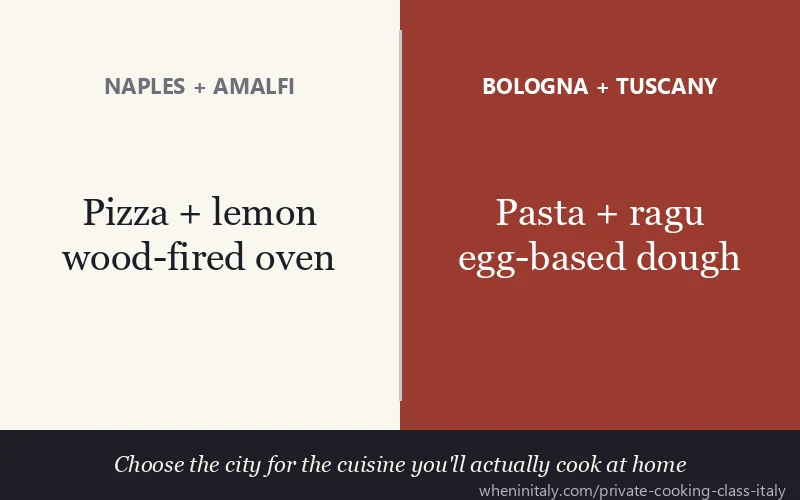
Tuscany (Florence, Chianti, Siena) is fresh egg pasta country: tagliatelle, ravioli, and pappardelle, usually with a meat ragu or simple butter-and-sage, finished with tiramisu. Florence is also where the “unlimited Chianti and Vernaccia” pour has become a category of its own, see below. Rome is the capital of cacio e pepe, carbonara, amatriciana, and gricia, the four sauces every Roman cook insists are non-interchangeable; classes usually do at least two plus a fresh fettuccine or ravioli. Naples, Sorrento, and the Amalfi Coast are pizza and lemon territory: Margherita in a wood-fired oven in Naples, lemon ricotta ravioli and limoncello on the coast, mozzarella demonstrations on the farms outside Sorrento. Bologna is the heart of fresh stuffed pasta: tagliatelle al ragu (the original “Bolognese,” served with ribbons not spaghetti), tortellini in brodo, and tortelloni stuffed with ricotta. Venice is the outlier, focused on cicchetti (Venetian small plates), seafood risotto, sarde in saor, and baccala mantecato, with classes built around a Rialto fish market visit. Sicily is arancini, caponata, pasta alla Norma, and cannoli filled to order, often paired with a market tour through Palermo’s Capo or Vucciria.
Choose the city for the cuisine you actually want to cook later at home. A pasta class in Naples and a pizza class in Bologna are both perfectly possible, but you are paying for the local specialty done by the people who grew up making it.
What you’ll typically cook, by city
The modal Florence class is two pasta shapes (tagliatelle plus a stuffed shape, usually ricotta-and-spinach ravioli) plus tiramisu from scratch, served with unlimited Chianti and Vernaccia. Three hours, sit-down meal at the end. In Rome, the modal class is fettuccine or tagliatelle plus one ravioli, finished with tiramisu and either a single carbonara demo or a cacio e pepe; classes in Trastevere are often built around a small trattoria kitchen rather than a school.
In Naples the standard pizza class lasts about two hours, fits ten to twenty people around a long counter, and ends with your own pizza coming out of a wood-fired oven that runs at 450 to 500 degrees Celsius (the pizza takes roughly ninety seconds to cook). On the Amalfi Coast and around Sorrento the format shifts to a half- or full-day farm visit: a walk through a working lemon grove, a mozzarella-making demo with cheese pulled from milk produced that morning, then a hands-on pizza or pasta session, often ravioli stuffed with the farm’s own ricotta or lemon-zested doughs. Limoncello tastings are the standard farewell drink.
Bologna classes typically run two-and-a-half to four hours and produce three pasta shapes: tagliatelle al ragu, tortelloni filled with ricotta, and tortellini in brodo. The full-meal version usually adds a starter and a dessert (zuppa inglese or fresh fruit). Venice classes are built around six or seven cicchetti plus one seafood risotto, with most operators including a forty-five-minute walk through the Rialto fish market beforehand. Sicilian classes vary widely by city: in Palermo the format is market tour at Capo plus a four-course meal of panelle, caponata, involtini di carne, and cannoli; in Taormina the headline class is just two iconic dishes done well, arancini and cannoli; in Catania you will see more home-kitchen classes with seasonal seafood and pasta alla Norma.
Class formats: group, private, in-home, agriturismo
There are four real formats and the price ladder corresponds neatly to them.
Small-group classes at a dedicated cooking school run two to three hours, fit eight to twelve people, and price between roughly 55 and 110 euros per person depending on the city, the operator’s reputation, and whether wine is included. This is the standard tourist booking and the format you will see on most aggregator sites.
Private classes, either for your group only at a school or in a chef’s restaurant kitchen, run three to five hours and price 100 to 180 euros per person at most quality operators, more for premium venues. Florence’s “private chef package” tier starts around 250 euros for a small group, not per person.
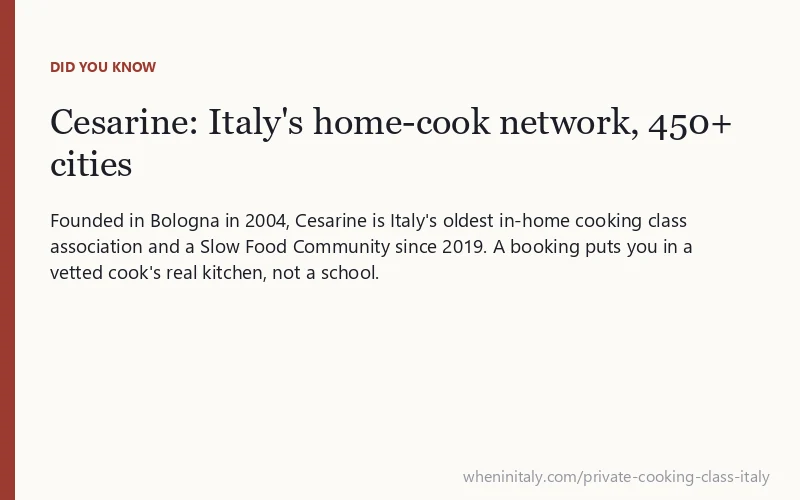
In-home classes are where the Cesarine network is the relevant institution to know. Cesarine is Italy’s oldest and largest home-cook association, founded in Bologna in 2004 by Professor Egeria di Nallo of the University of Bologna as an Association for the Protection and Enhancement of Italy’s Typical Culinary Gastronomic Heritage. It now operates in roughly 450 cities and has been recognized as a Slow Food Community since 2019. A Cesarine booking puts you in a vetted home cook’s actual kitchen, usually for a hands-on three-hour session followed by a meal at the family table. For travelers who want the “had dinner with an Italian family” experience without the awkwardness of an unstructured invitation, this is the format. Take-a-Chef, ChefMaison, and Chef on Demand cover the same in-home niche with more of a private-chef framing (no hands-on cooking, just the chef cooking for you), with per-person prices typically 68 to 255 euros depending on menu tier and group size.
Agriturismo and farmhouse classes are usually full-day affairs: pickup or transfer in, a market or garden walk, a four- or five-course cooking session, lunch with the farm’s wine, and often a tour of the property. Tuscany pricing typically runs 120 to 250 euros per person; Sorrento and Amalfi Coast farms run 90 to 180 for a half-day and into the 200s for full-day. The market visit adds about an hour of walking and twenty to thirty euros at most operators that bolt it on as an extra; many of the better operators include it in the base price.
Cooking with kids
Pizza classes are the single best entry point for children. The format is short (two hours), the dough is forgiving, and putting your own pizza into a wood-fired oven is genuinely thrilling for a five-year-old in a way that rolling tagliatelle is not. Several Naples and Sorrento operators take ages five and up by default, and Rome has dedicated kid-and-family pizza classes that group children by age (3 to 5, 6 to 9, 10 to 14, and teens) with adapted instruction for each.
Group pasta classes typically welcome children from age five with an adult, though some require eight or older for safety reasons (sharp knives, hot pasta water at the boil). The reliable kid signal in a listing is the word “family” in the title and an explicit minimum age in the FAQ. Adults pay the full rate; children typically pay 30 to 50 percent less and get soft drinks instead of wine. What does not work for kids: full-day agriturismo experiences with adults-pace lunches, market tours longer than thirty minutes, and any private chef format with no hands-on cooking. Toddlers under three are difficult almost everywhere; a few in-home Cesarine hosts will accommodate, but you should ask before booking.
Wine pairings and dietary requests
Wine is the second most-asked-about element after price. The Florence “unlimited wine” trend, which has spread from Cucina in Torre and similar central Florence schools to most of the city’s three-hour evening classes, means exactly what it says: a continuous pour of house Chianti (red) and Vernaccia di San Gimignano (white) throughout the cooking and the meal. The wine is house-quality, not estate-bottled; reviewers occasionally call the table wine “average” and that is a fair description. If wine quality matters more than quantity, look at Chianti farmhouse classes instead, which pair their own DOCG bottles with the meal, typically two or three pours rather than unlimited. Bologna and Rome classes usually include one or two glasses, named by varietal. Venice classes lean toward prosecco and Soave with cicchetti.
Dietary accommodation has become standard at the major operators, but the lead time matters. Vegetarian is universal: every credible school has a vegetarian sauce option ready and the substitution costs nothing. Vegan is widely available with 24 to 48 hours notice; some egg-pasta classes will swap to a semolina-and-water dough so vegans can still make pasta from scratch. Gluten-free flour is increasingly common (one Florence school charges an 8-euro supplement, which is typical) but coeliacs should be cautious because most school kitchens are not segregated and cross-contamination is real. Dairy-free is straightforward in Rome and Naples and harder in Bologna, where butter and Parmigiano are core. Kosher and halal are rare and require booking with a specialized operator. The rule of thumb: tell the operator at booking, then again 24 hours before the class. Both communications matter.
Prices and what 60 versus 200 euros buys
A useful price ladder for a 2026 trip:
Around 35 to 55 euros per person: an “express” class, ninety minutes to two hours, usually a single pasta shape and no wine. Fine for a budget afternoon, weak for actually learning.
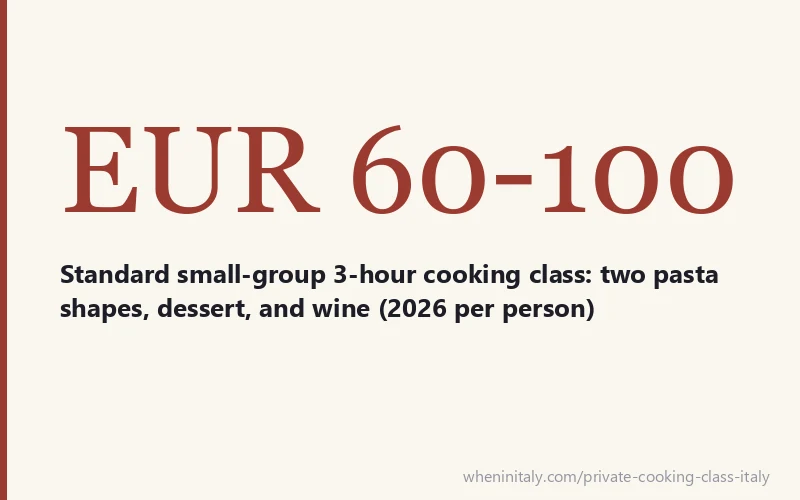
60 to 100 euros per person: a standard small-group three-hour class with two pasta shapes, a dessert, and either two glasses or unlimited wine depending on the city. This is the modal booking and the right starting point for most travelers.
100 to 180 euros per person: a private class for your group, usually four hours, often in a restaurant kitchen or a dedicated school’s private room. Three or four dishes, more attention from the chef, better wine. Florence’s premium private packages with truffle or prosecco add-ons sit at the top of this band.
150 to 250 euros per person: in-home Cesarine or premium private chef formats, with three to four hours of hands-on cooking and a full multi-course meal in someone’s actual home or villa.
180 to 300 euros per person: a full-day Tuscan or Amalfi farmhouse class with hotel pickup, market or garden walk, four to five courses cooked over four hours, full lunch with estate wine, and often a property tour. The 300-euro tier usually adds private transfer from Florence or Sorrento, and a deeper wine tasting.
The two factors that move price within each band are the city (Florence, Venice, and Amalfi Coast run roughly 20 percent higher than Bologna or Catania) and whether the operator is using a school kitchen with rotating staff or a single named chef in their own space. Weekday bookings are commonly 15 to 20 percent cheaper than weekends at the private and in-home tiers.
Booking, timing, and what to expect on the day
Book early. Florence’s pasta-and-tiramisu classes sell out in peak season at a rate that surprises first-time visitors; the best slots in May, June, September, and October typically clear two to three weeks ahead, and the most-booked private operators take reservations 30 to 45 days out for high season. Cesarine in-home classes in popular cities (Bologna, Florence, Rome) often need four to six weeks. For a small-group walk-in class in November or February you can usually book the day before. Christmas week and Easter book like high season regardless of city.
Lunch versus dinner classes are a real choice. Lunch sessions (typically 10:00 or 11:00 start, finishing by 14:00 or 15:00) tend to be quieter, leave the rest of the day free for sightseeing, and are the easier choice for jet-lagged travelers and families. Dinner sessions (17:00 or 18:00 start, finishing 21:00 or 22:00) are more social, drink-heavier, and are where the unlimited-wine Florence format really comes into its own. The Italian “pranzo della domenica” (Sunday lunch) tradition makes Sunday lunch classes especially good for a family-style atmosphere; some operators only offer their best private formats on Sunday for this reason.
On the day, arrive ten minutes early, expect the class to start with a kitchen orientation and a glass of something (prosecco or wine), and plan to spend the first forty-five minutes on dough or filling work, the next hour on assembly and cooking, and the final hour at the table. Market visits (in Florence’s San Lorenzo or Sant’Ambrogio, Bologna’s Mercato delle Erbe or Mezzo, Venice’s Rialto, Palermo’s Capo or Vucciria) add about an hour at the front and are scheduled before the cooking starts so the ingredients are fresh. Bring a light jacket for the market portion in shoulder seasons; the cooking spaces themselves are warm. You will leave with the recipes, often a small printed booklet, occasionally an apron, and very rarely leftovers because the meal at the end is calibrated to finish what you cooked.
Sources and references
- Cesarine official site - in-home cooking classes across 450+ Italian cities
- Cesarine introduction (founding history) - 2004 founding by Egeria di Nallo, Slow Food recognition
- Florence Pasta and Tiramisu Class with Unlimited Wine on GetYourGuide - reference for the modal Florence format
- 360 Cooking Class Florence pricing and structure - 3-hour class pricing detail
- Pasta Class Florence - what travelers leave with (recipes, apron)
- Devour Tours Rome pasta-making class - Trastevere format
- Eating Europe Rome pasta class - Rione XIII trattoria kitchen
- Mama Loves Rome - family cooking class review - kid-friendly Rome operators
- Wanderlux on cooking with kids in Rome - age-grouped pizza class details
- InRome Cooking - Pizza and Gelato for Kids - operator catering specifically to children
- AVPN - Neapolitan Pizza Maker for a Day - the Associazione Verace Pizza Napoletana premium class
- How to book a pizza-making class in Naples - duration, oven temperature, format
- Amalfi Heaven Gardens cooking class - lemon farm and pizza format on the Amalfi Coast
- Experience Amalfi Coast - Sorrento Countryside (Lemons, Mozzarella, Pizza) - half-day farm format
- Agriturismo Nonno Antonino farm tour - mozzarella demo and pizza class
- Taste Bologna pasta class - tagliatelle, tortellini, tortelloni format and pricing
- Emilia Delizia Bologna with market tour - Mercato delle Erbe morning visit
- Cesarine Bologna - Roberta’s ragu masterclass - in-home Cesarine listing example
- Cookly Venice cooking classes - cicchetti, sarde in saor, risotto al nero di seppia
- Rialto Market and Cicchetti class on GetYourGuide - market plus cooking format
- Cookly Sicily cooking classes - regional dish coverage and class durations
- Cooking Vacations Palermo - Capo market plus four-course meal format
- Take a Chef Italy private chef pricing - in-home chef per-person pricing
- ChefMaison Florence private chef - 68 to 255 euro per-person tier reference
- Soprano Villas FAQ on private chef cost in Italy - daily chef rate ranges
- Mama Florence cooking school - reference for premium Florence operator
- In Tavola Florence - Oltrarno cooking school
- Tripadvisor In Tavola Florence reviews - mixed feedback on class size
- Cucina in Torre (Cinto) Tripadvisor - venue and class context in central Florence
- Tuscany Cooking Class booking and payment terms - peak-season reservation timing
- BethGraham guide to cooking classes in Italy - hands-on versus demo distinction and regional best picks
- Scenic and Savvy on choosing a cooking class in Italy - class format and what to expect on the day
- Healthy Italia - 6 factors for choosing a cooking class - hands-on quality criteria
- Florencetown Central Market Tour and class - Florence market integration
- Florence Country Life Chianti farmhouse class - 5-course Chianti farmhouse format